Key takeaways:
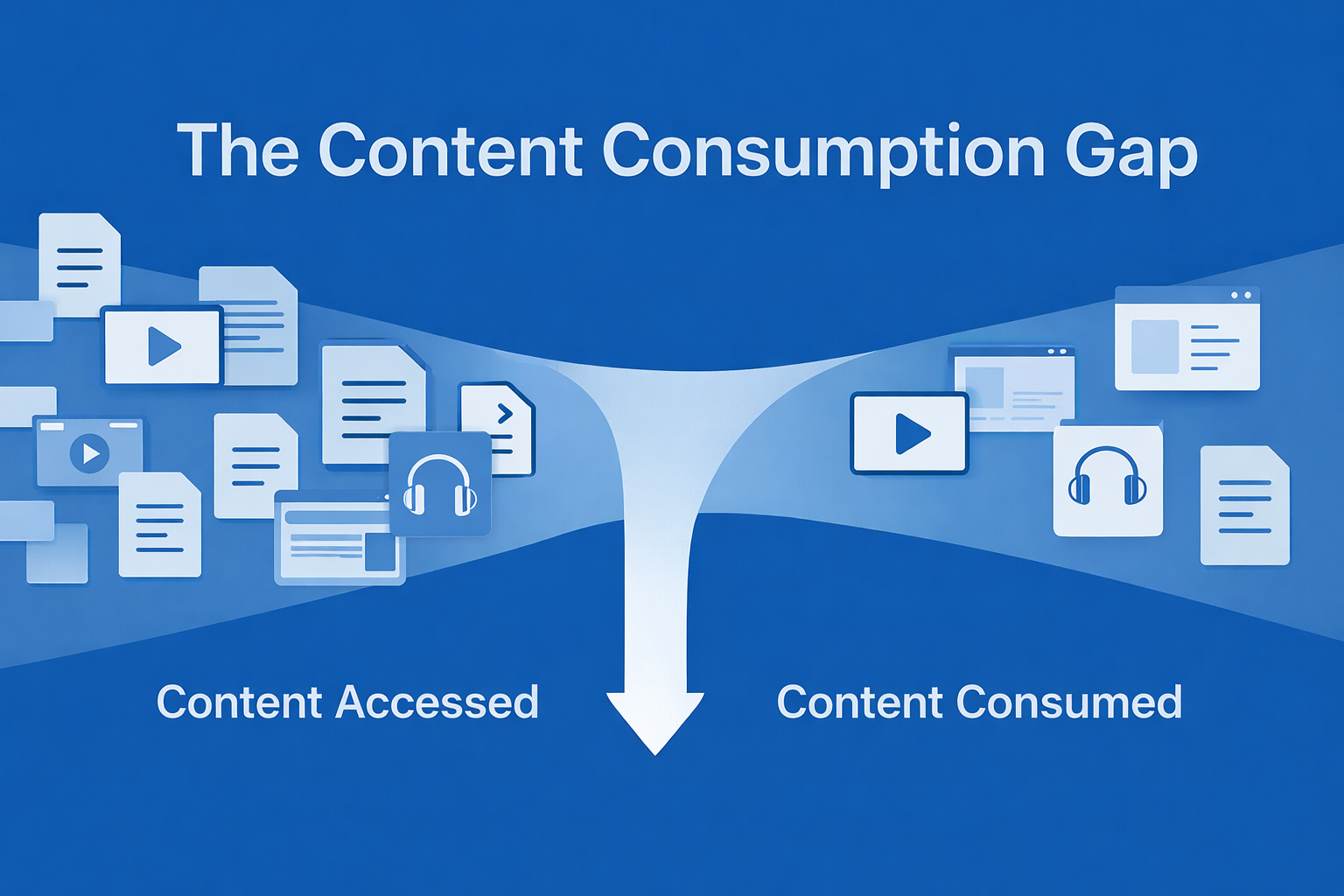
- The content consumption gap is the difference between content that is accessed and content that is actually finished.
- Most long-form digital content is skimmed, not consumed end-to-end, regardless of quality.
- Attention drop-off is driven by behavioral habits, content structure, and format friction.
- Completion matters because fully consumed content correlates with higher understanding, trust, and conversion.
- The gap can be measured using scroll depth, time-in-content, completion events, and retention curves.

The Content Consumption Gap refers to the discrepancy between the content we publish and how much of it our audience actually consumes. In simple terms, it’s the gap between content delivered and content digested by readers or viewers. In B2B, this often shows up as a time lag between when a prospect requests an asset (like a whitepaper or webinar) and when they actually open it. NetLine defines this as the “Consumption Gap” between request and consumption.
This phenomenon has become a pressing challenge in today’s attention economy, where users are inundated with information and often struggle to finish longer content pieces. The first step to closing this gap is understanding why it exists and how it manifests across modern digital content formats.
How the Content Consumption Gap Emerges in Modern Content
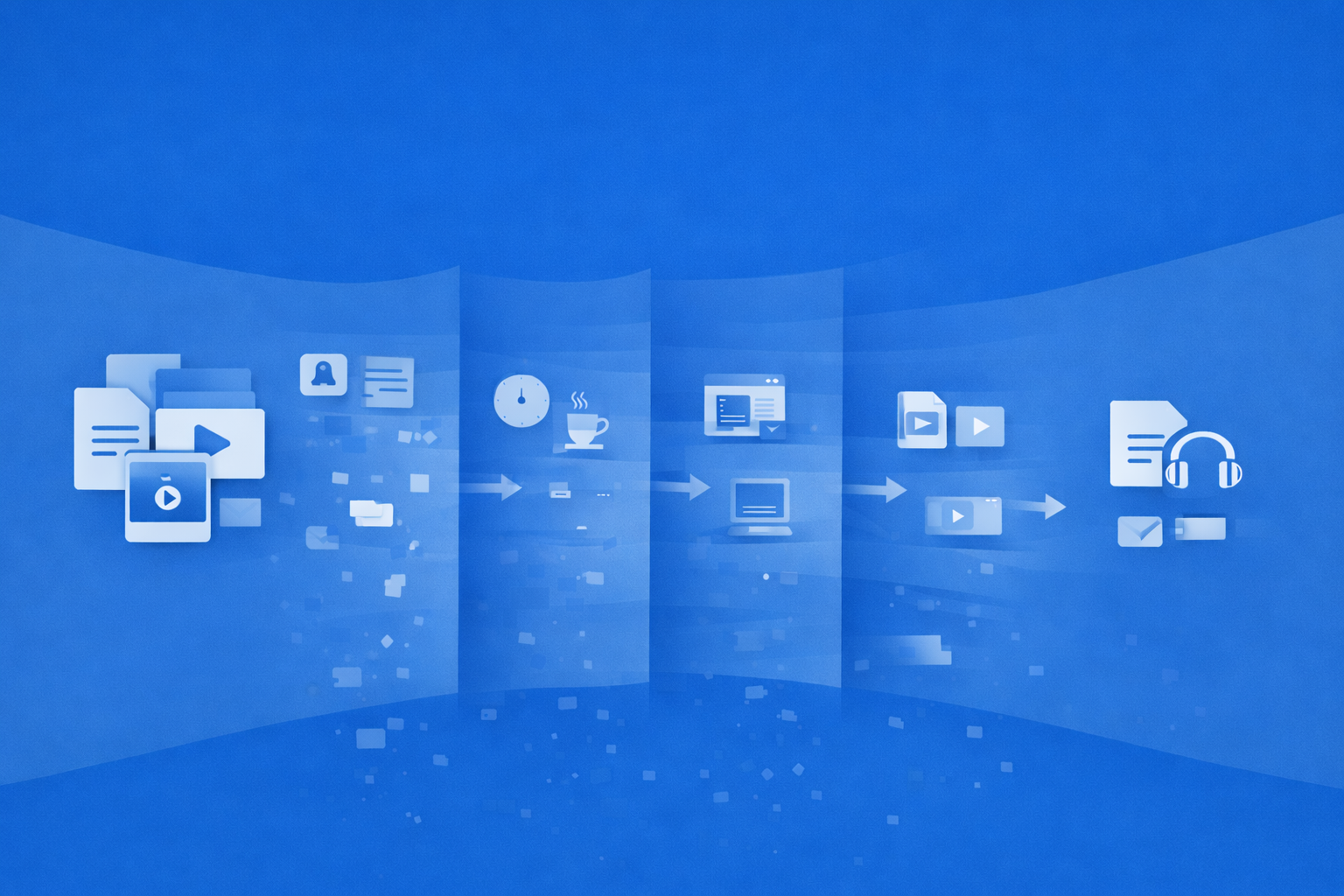
The content consumption gap can be observed across nearly every digital format content marketers produce. Think about it: how often have you downloaded a PDF report “to read later,” only to skim it or never return? Or consider blog posts and guides that attract clicks but lose readers halfway through. Webinars and videos show the gap clearly as well, many people register or start watching, but a significant portion drop off before the end. In all these cases, modern audience behavior creates a gulf between content output and actual consumption. Below are common scenarios:
- Lengthy PDFs and e-books: Users may eagerly download in-depth guides or reports, especially when gated behind a lead form, but then postpone reading them. The NetLine 2025 State of B2B Content Consumption and Demand Report found the average time between request and consumption widened from 31 hours to 39 hours between 2023 and 2024.
- Blogs and articles: Blog posts often suffer heavy skimming. Readers might read the title and opening, then scroll rapidly or bounce. Nielsen Norman Group reports that on the average web page users have time to read at most 28% of the words during a visit (and 20% is more likely).
- Webinars and videos: Live webinars routinely see fewer attendees than registrants. Benchmark reporting from ON24 notes that the average registration-to-attendance conversion rate was 57% in its 2025 webinar benchmarks summary. Meanwhile, long-form video completion drops sharply as duration increases. MarketingProfs reports that only 22% of viewers finish videos over 20 minutes in the dataset they summarized.
- Online courses and podcasts: Even educational content isn’t immune. People start courses and fail to finish modules, or subscribe to podcasts but only listen to select episodes or partial episodes. The abundance of alternatives and limited time means even high-interest topics compete for attention.
In summary, modern digital content often reaches an audience, but only a fraction of that content is consumed in full. This consumption gap emerges due to behavioral habits, content design issues, and format frictions, which we explore next.
Why Does the Gap Happen? Causes of Incomplete Content Consumption
The reasons behind the content consumption gap can be grouped into three broad categories: behavioral causes (how audiences naturally behave), structural causes (how content is presented and organized), and format-driven causes (challenges inherent to the medium). These factors often overlap and reinforce each other.
Behavioral Causes: Short attention and information overload
One major driver is audience behavior in the digital environment. People are bombarded with content and have adapted by scanning and multitasking rather than deep reading. As usability research notes, users rarely read word by word, instead they scan for what’s relevant while expending the least effort possible. See Nielsen Norman Group’s classic summary: How Users Read on the Web.
This means many will skim headings, bold text, or the first lines of paragraphs and skip the rest. If the content doesn’t grab them quickly, attention drops off fast.
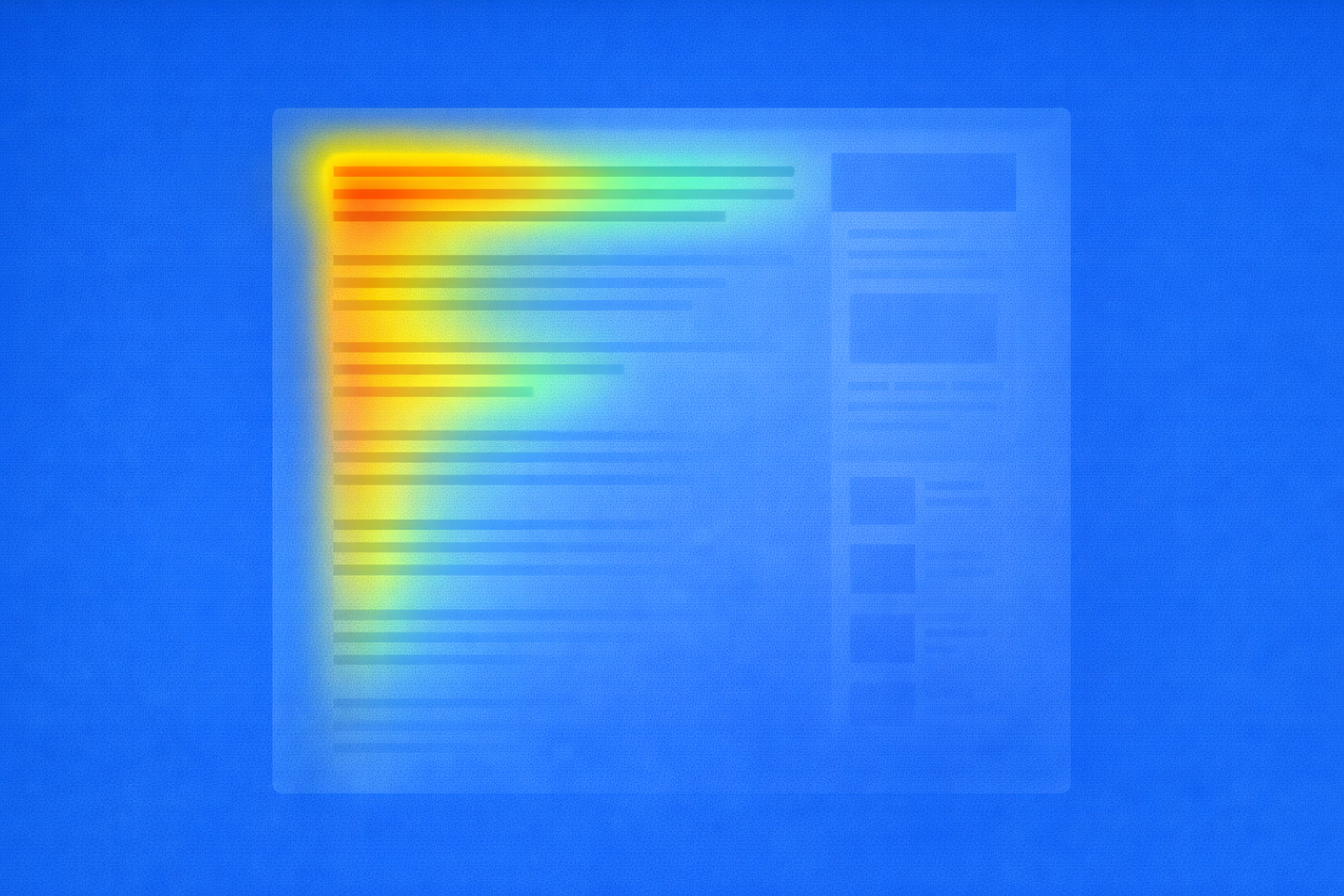 Attention spans on digital channels are famously short. A widely cited Chartbeat analysis (summarized by Time) reports that 55% of visitors spent fewer than 15 seconds actively on a page.
In practical terms, you may have only a few seconds to hook a reader before they lose interest or get distracted. Even if someone intends to read, competing tabs, notifications, and tasks can pull them away mid-way. This creates “attention drop-off,” where the further into the content, the fewer people remain engaged.

Another behavioral factor is the “save it for later” problem. Users collect content with good intentions but never return. In B2B, leads may request a whitepaper but not open it for days or weeks, or ever. NetLine’s work on the Consumption Gap captures this lag directly.
Structural Causes: How content design and structure influence consumption
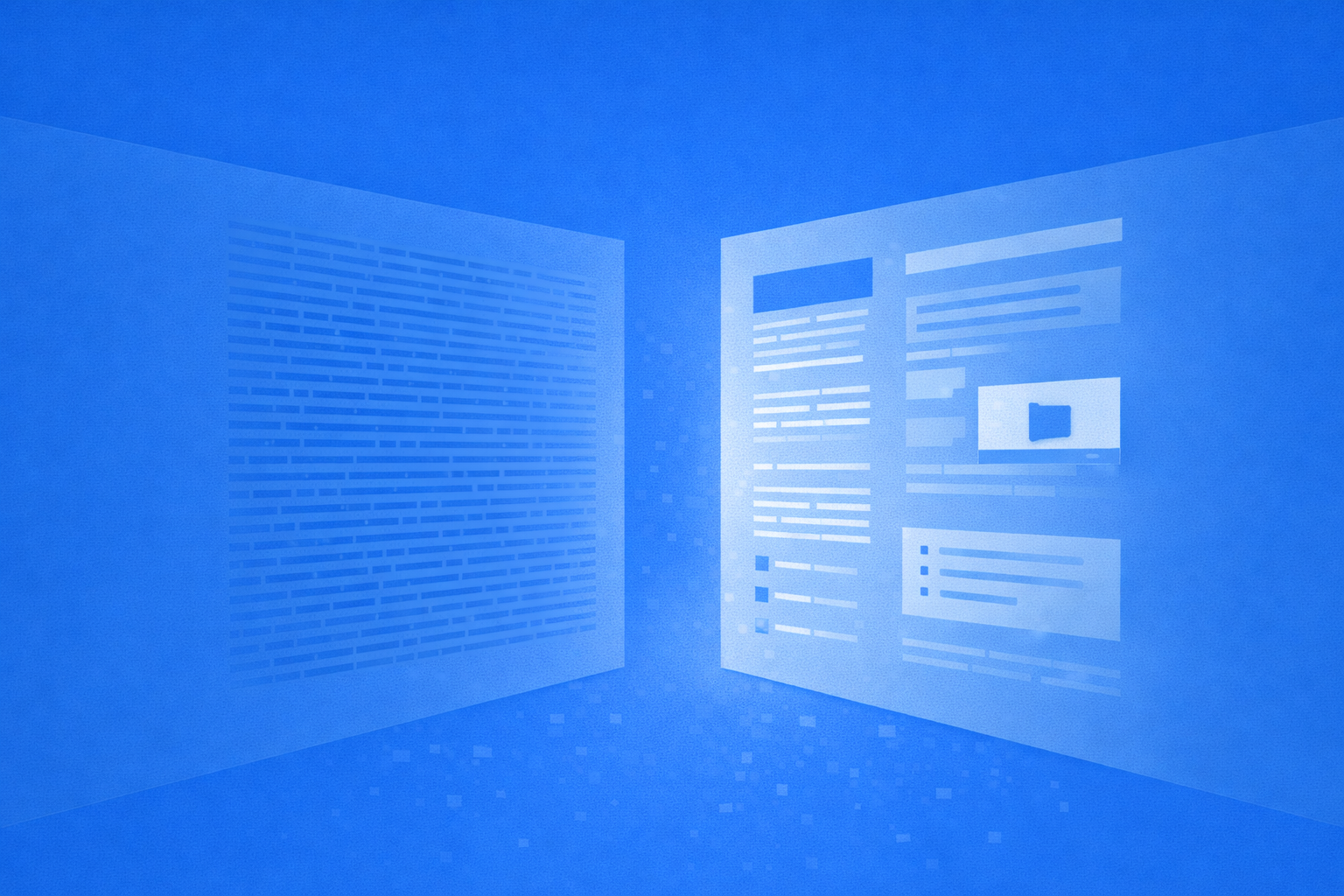
The way content is structured can either bridge or widen the consumption gap. Dense walls of text without clear sections overwhelm and encourage skimming. Eye-tracking work supports the idea that readers rely on structure cues. For practical guidance, see Nielsen Norman Group’s recommendations on making content scannable.
Likewise, overly long or convoluted content can deter completion. Clarity and brevity matter because content needs to deliver value before the audience’s patience runs out. Structural issues that contribute to the gap include:
- Poor readability: Long blocks of text, weak hierarchy, and low scanning affordance.
- Lack of navigation: No summary, no table of contents, no clear sectioning.
- Slow introductions or filler: Value arrives late, so readers abandon early.
- Gating and access friction: Too many steps before the content is even accessible.
In essence, content that is not designed with user experience in mind struggles to hold attention. Good structure keeps more people engaged to the end. Poor structure invites drop-off.
The Three-Layer Content Consumption Gap Model
The content consumption gap can be understood through a simple three-layer model. Most breakdowns occur in one or more of these layers.
- Behavior layer: How people actually consume content today, including scanning, multitasking, and procrastination.
- Structure layer: How content is written, organized, and visually presented.
- Format layer: The medium itself, including length, device compatibility, and time commitment.
Closing the gap requires addressing all three layers together. Improving only one (for example, shortening content without fixing structure) often produces limited results.
Format-Driven Causes: Format friction and medium limitations
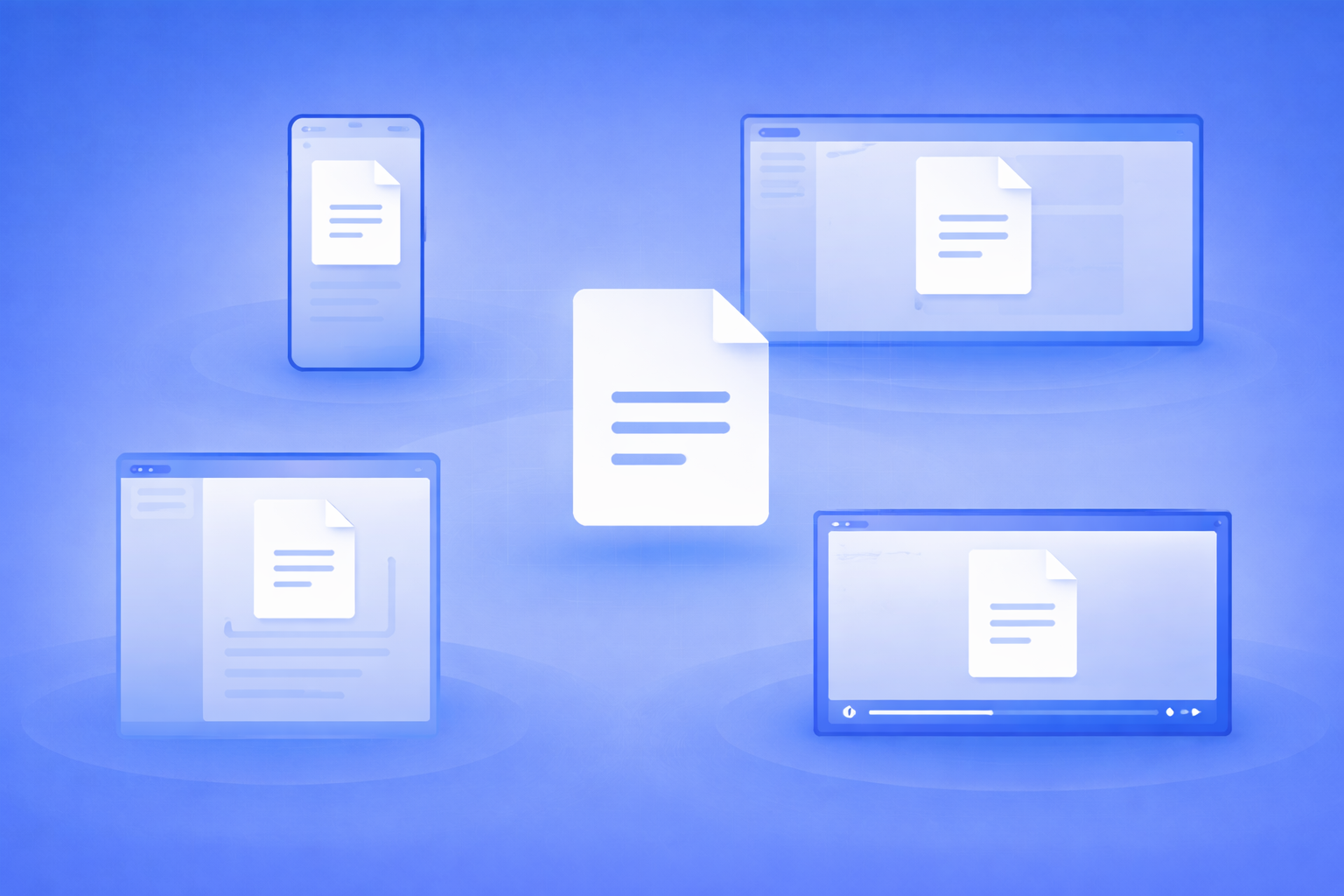
Sometimes the format itself creates barriers to completion, what we might call format friction. Different mediums come with different expectations and constraints. Examples:
- Webinar fatigue: Webinars are scheduled and long, demanding uninterrupted time. Many registrants do not attend live. ON24’s 2025 summary highlights average registration-to-attendee conversion at 57%.
- Lengthy video: Completion drops as duration increases. MarketingProfs reports that only 22% finish videos longer than 20 minutes in the dataset they summarized.
- PDFs on mobile: A PDF designed for print or desktop is often painful on mobile, causing abandonment. Many teams address this by offering an HTML version alongside the PDF.
- Single-format delivery: A portion of your audience simply prefers a different medium. If you provide only one format, you lose completion from the rest.
NetLine also frames format and timing as “go-to-market factors” under marketers’ control, showing how length, format fit, and delivery context influence whether content is consumed at all. See the NetLine report: 2025 State of B2B Content Consumption and Demand Report.
How Big is the Gap? Directional benchmarks
Benchmarks vary by audience and topic, but directional numbers help illustrate how much content typically goes unconsumed:
- Article reading depth: Nielsen Norman Group reports that on the average web page users have time to read at most 28% of the words during an average visit (and 20% is more likely).
- Time-on-page reality: A Chartbeat analysis summarized by Time reported that 55% of visits lasted fewer than 15 seconds, not enough time to read most articles.
- Video completion rates: MarketingProfs reports only 22% completion for videos longer than 20 minutes in the dataset they summarized.
- Webinar attendance and replay behavior: ON24 reports average registration-to-attendee conversion of 57%, and on-demand replays often represent a significant share of total views. Wistia reports that 40% of webinar views come from on-demand replays.
Disclaimer: These are averages and summaries from large datasets. Your performance will differ. The point is that partial consumption is normal, so “downloaded” is not the same as “absorbed.”
Why Full Content Consumption Matters
If people still get some information via skimming, why does completion matter? Because completion is often where understanding, confidence, and action actually happen.
- Effective education and messaging: Most content is created to teach or persuade. If readers miss the core argument or the takeaway, they leave with incomplete understanding.
- Lead qualification and intent signals: Someone who finishes a guide or stays engaged through a webinar is signaling stronger intent than someone who bounced. This matters for follow-up sequencing and lead scoring.
- Nurture and conversion: If prospects do not reach the proof, differentiation, and CTA, they do not progress. Increasing completion increases the share of leads who actually receive the message you wrote.
- Trust and authority: Content that holds attention builds credibility. Content that repeatedly loses readers mid-way teaches them that your material is skimmable and optional.
- Content ROI and efficiency: If only a small fraction consume what you publish, much of your production effort is wasted. Closing the gap improves ROI without increasing publishing volume.
Measuring the Content Consumption Gap
You can’t improve what you don’t measure. The key is tracking consumption signals, not just access signals.
- Scroll depth (for web pages): Track 25%, 50%, 75%, and 100% scroll. A steep drop-off early is a clear gap indicator.
- Time relative to length: Compare time on page to expected reading time, or time watched to video duration.
- Completion events: Define completion (for example 90% watched, final page reached, end-of-article CTA seen) and measure it consistently.
- Heatmaps: Scroll heatmaps reveal exactly which sections are “hot” versus ignored.
- Engagement segmentation: Bucket users by behavior (skimmed, partial, deep) to see what share truly consumed the content.
- Document analytics for PDFs: If possible, track opens and page-by-page behavior. If you cannot, use proxy signals (end-of-document link clicks, end CTA usage) to estimate completion.
Bridging the Gap: Strategies to Boost Content Completion
The content consumption gap is not inevitable. It can be reduced by designing for how people actually consume information. The strategies below are neutral and tool-agnostic.
1. Craft content for scanning and engagement
- Use clear headings and subheadings so scanners can understand the structure quickly.
- Use lists to make key points easy to absorb.
- Front-load value so readers get payoff early.
- Write clearly with short paragraphs and minimal filler.
- Use visuals strategically to reset attention and explain complex ideas.
2. Offer format options and accessibility
- Provide summaries: A “Key takeaways” box improves value capture for skimmers.
- Publish multi-format: Offer an HTML version, downloadable version, and a short summary version when appropriate.
- Ensure mobile-friendly design: Reduce friction for mobile readers.
- Use on-demand delivery: Record webinars and make them easily accessible. Replays can be a large share of views. Wistia notes 40% of webinar views come from replays.
- Improve accessibility: Captions for video, transcripts for audio, strong contrast and readable typography for text.
3. Segment content into manageable parts
- Use series and chapters: Break mega-guides into smaller posts with clear sequencing.
- Use modules: Chaptered webinars, timestamps, and TOCs help people return and resume.
- Publish episodically: Release insight chunks to build habit and increase total completion over time.
4. Engage and re-engage the audience
- Add interaction: Polls, quizzes, expanders, and checkpoints reset attention.
- Increase relevance: Personalization and segmentation reduce drop-off.
- Use mid-content re-engagement: Progress cues, “what’s next,” and internal jump links keep readers moving.
- Follow-up nudges: Re-send the content with a “start here” summary, highlight the most valuable section, or add chapters.
5. Continuously improve with feedback and data
- Find drop-off points: Identify where scroll depth collapses and improve that section first.
- Test formats: Try shorter versions, chaptered versions, and summary-first versions.
- Ask for feedback: A one-question “Was this helpful?” prompt can reveal why people bailed.
- Keep it current: Outdated stats and broken visuals destroy trust and increase exits.
Common Misconceptions about the Content Consumption Gap
- “If they requested or opened it, they must have read it.” A download is not consumption.
- “Modern attention spans are too short, nothing works.” People focus deeply when content is relevant and well-designed.
- “Everything should be shorter.” Length is not the enemy, unnecessary length is.
- “If content isn’t consumed, the topic failed.” Often it’s format, timing, or structure.
- “Our audience is different.” Everyone is busy. Assume friction exists and design around it.
- “Consumption can’t be measured.” It can be estimated well using scroll, time, and completion signals.
Closing Thoughts

The content consumption gap underscores a fundamental challenge in modern marketing and product education: grabbing and holding attention in a world of distractions. Teams invest heavily in content, but content only works when it is actually consumed.
By defining the problem, measuring consumption (not just access), and designing content around real behavior, you can narrow the gap and increase the share of your audience that truly absorbs your message.
Closing the content consumption gap isn’t only about metrics. It’s about respecting your audience’s time, and ensuring that what you publish is structured, accessible, and genuinely consumable.
Sources referenced: NetLine’s 2025 State of B2B Content Consumption and Demand Report
Nielsen Norman Group on reading depth and web scanning behavior
Time’s summary of Chartbeat engagement data in What You Think You Know About the Web Is Wrong
ON24’s 2025 webinar benchmarks summary
MarketingProfs on video retention by length, and Wistia on on-demand replay share